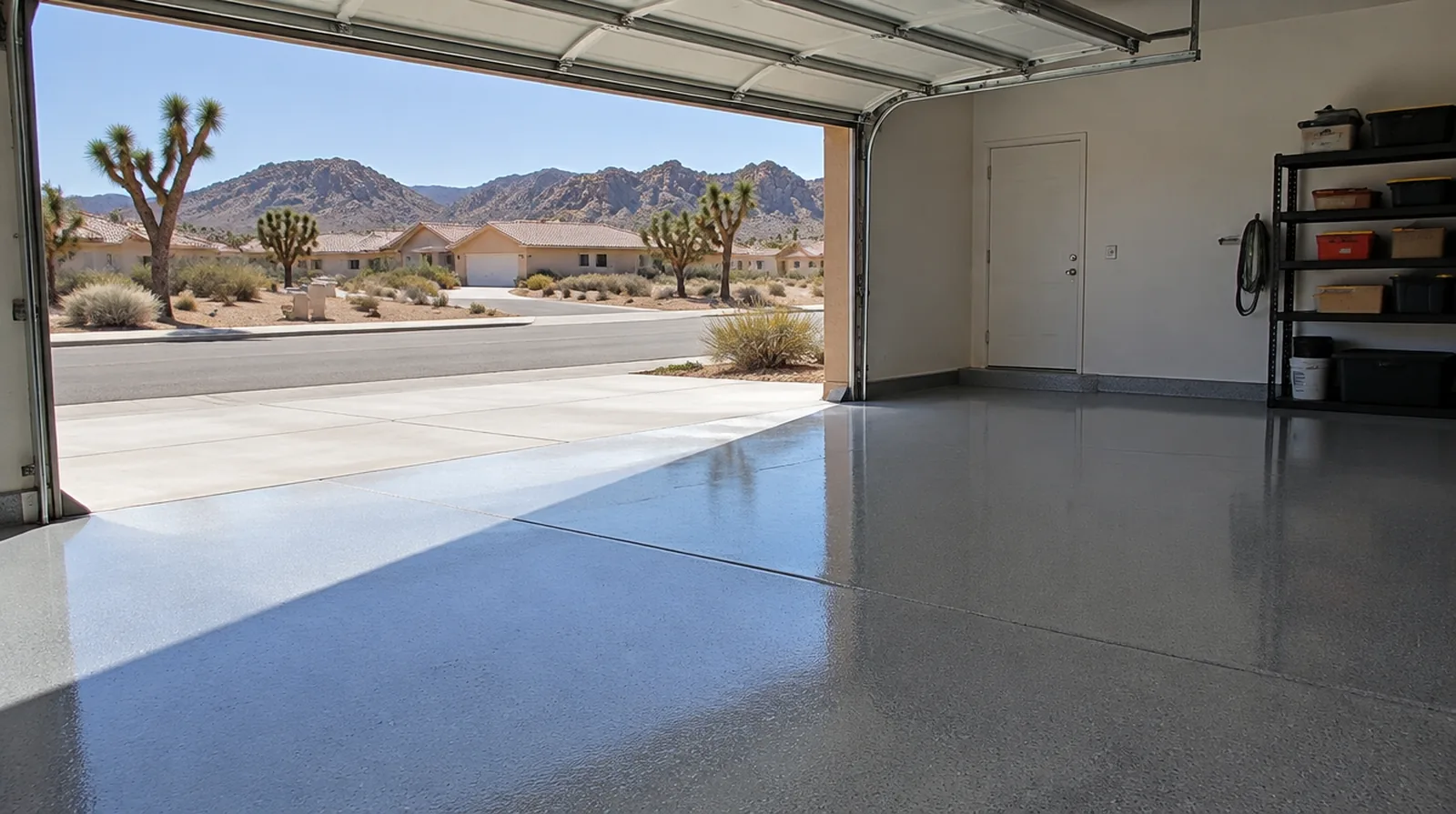
The layers, in order
A garage system starts with grinding to open the concrete. Next we fill cracks and pits with a fast-setting repair material and grind those flush. A penetrating primer soaks in and locks onto the slab, a pigmented body coat adds color and thickness, and a clear top gives you the wear surface. Many people add a flake broadcast into the body coat.
Why grinding matters so much here
Wind pushes fine desert sand into every garage in town, and it settles into the pores of bare concrete. Acid etching from a kit does not remove it. Diamond grinding takes the top skin off, along with the dust, oil and old sealer, so the primer bonds to clean concrete. Our grinders run tied to vacuums because concrete dust contains silica; OSHA explains the hazard.
Heat swings and cracks
Concrete expands in the afternoon and shrinks at night. Over years, that opens hairline cracks, especially near control joints. We fill them before coating so the finished floor looks even and dirt has nowhere to collect.
What the price depends on
- Garage size and how many bays
- Whether an old coating or paint has to come off
- How many cracks and spalls need filling
- Epoxy clear top versus a polyaspartic top for sun-facing doors
How long will I be out of my garage?
Usually two days for the install. Light foot traffic the next day, and give it about five days before parking a vehicle.
Is it slippery?
Flake or a fine grit in the topcoat gives you grip, even when you track in water from the hose.
Garage floor epoxy for Apple Valley homes
Garages here often hold trucks, side-by-sides, trailers and work gear. The coating has to take that weight and the sand that comes with it. We build a thicker system for these garages than a light-use floor would need, and we use a UV-stable top because afternoon sun pours in when the door is open.
Winter installs
Cold nights slow curing. In winter we schedule work for the warmer part of the day and may use a faster-curing system so the floor sets properly.
Garage questions
Do you coat the stem walls? Often, yes, a few inches up, so sand and water do not collect at the edge.
Can I store things on it right away? Give it a few days before heavy items.
Keeping desert sand off a new Apple Valley garage floor
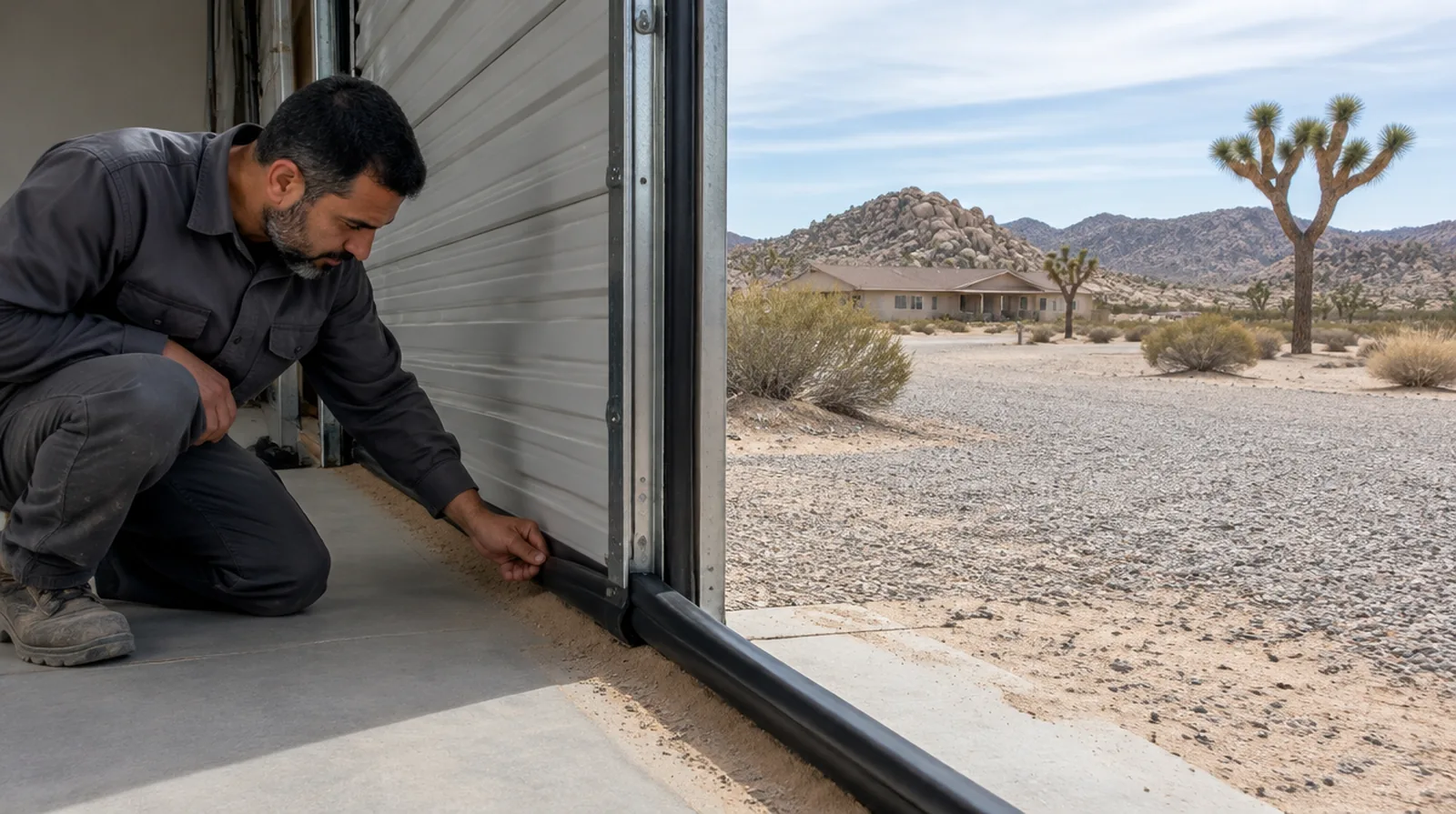
Wind is part of life in the Victor Valley, and fine sand finds every gap in a garage. That matters most during and right after a coating job, when dust can settle into wet material.
Checking the door seal first
Before install day, we look at the rubber seal along the bottom of the garage door and the weatherstripping on the sides. If the seal is cracked or the door does not close evenly, we suggest replacing it first. A tight door keeps sand from blowing in while the coating cures and long after.
Picking a calm day
We watch the forecast and avoid days with strong wind when possible. If a breeze picks up during the job, we keep the door closed as much as the material allows and use fans inside instead.
Cleaning before every coat
After grinding, the crew vacuums the slab thoroughly, then wipes it down. Between coats, we check for dust again. These steps take time, but they keep grit from getting locked into the finish.
Thresholds and the apron
The first few feet inside the door take the most sand and wear. We pay extra attention to repairs there, and we can carry the coating right to the edge so there is no bare strip where grit collects.
Everyday sand control
A doormat at the house entry, a quick sweep each week and a stiff broom near the door go a long way. The sealed surface makes cleanup quick because sand no longer sinks into the pores of the concrete.
Gravel driveways
If your driveway is gravel or dirt, tires will carry small stones inside. A textured topcoat and a busier chip pattern help hide that wear between cleanings.
Ready to seal out the sand?
Call (760) 515-4269 for a free garage estimate.