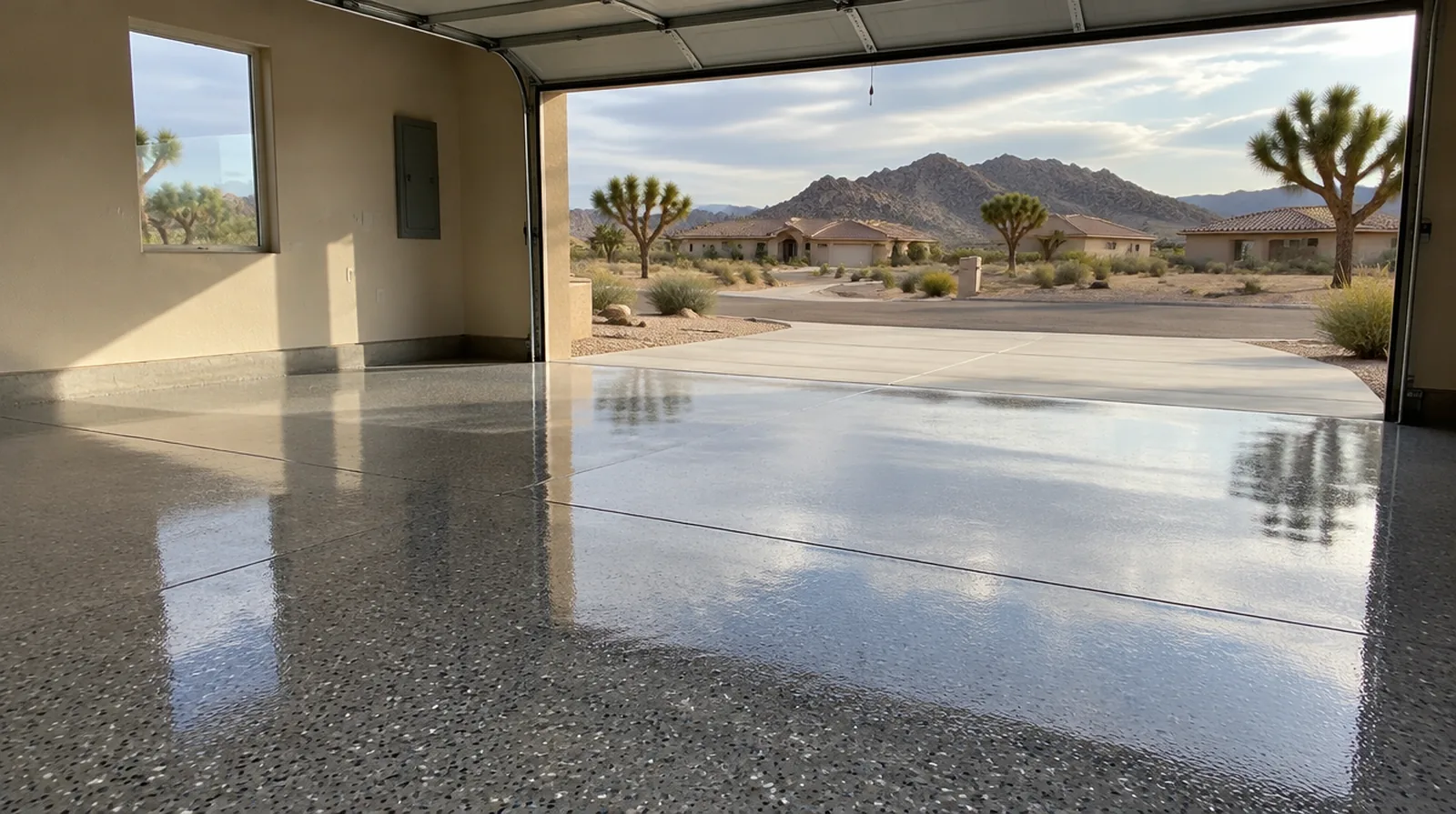
Desert slabs take a beating
Up here on the Mojave side of the Cajon Pass, a garage floor lives a hard life. Afternoons in July push past 100 degrees, the temperature can drop forty degrees after sundown, and every windy day pushes fine sand under the door. Bare concrete soaks up that dust and turns it into a gray film you track into the house.
A bonded coating seals the surface so grit sweeps up instead of grinding in. We start every floor with diamond grinding, fill the shrinkage cracks that open up from those daily swings, then build the coating in layers.
Floors we put down around town
- Garage epoxy systems for homes off Bear Valley Road, Jess Ranch and the newer tracts east of Highway 18
- Chip and flake floors in tan and desert-toned blends that hide sand
- Metallic resin for man caves, game rooms and showrooms
- Polyaspartic for sun-facing garages and RV ports
- Shop and warehouse floors for businesses along the industrial streets near the airport
- Polished slabs, coating repair and sealers for patios and drives
- Driveway coatings for long ranch drives and RV pads
- Pool deck coating built for desert sun and sand
- Concrete patio coating made for high desert sun, wind and cold nights
Lots of room, lots of floor
Plenty of Apple Valley homes sit on half-acre or larger lots with three-car garages, detached shops and covered RV parking. That is a lot of concrete, and it is usually the part of the property that gets the least attention. We quote each area separately so you can coat the main garage now and the shop later if you want.
Questions we hear in Apple Valley
Will the heat soften the coating?
Not a properly cured system. Where a slab gets direct afternoon sun, we finish with polyaspartic because it handles UV and heat better than a standard clear epoxy.
Does it get too cold to install in winter?
Some January nights dip below freezing, so we watch the slab temperature and schedule winter jobs for the warmer part of the day.
Can you coat the RV pad too?
Yes. Outdoor pads usually get a sealer or a UV-stable coating rather than a glossy indoor system.
Jess Ranch to the north end of town
We put down epoxy flooring in Apple Valley in the newer homes around Jess Ranch, the ranch-style houses off Bear Valley Road, and the larger lots with detached shops toward the north and east. Many of those properties have a lot of concrete, so it is common to coat the garage now and come back for the shop or the patio later.
Big garages, RV barns and shops on Apple Valley lots
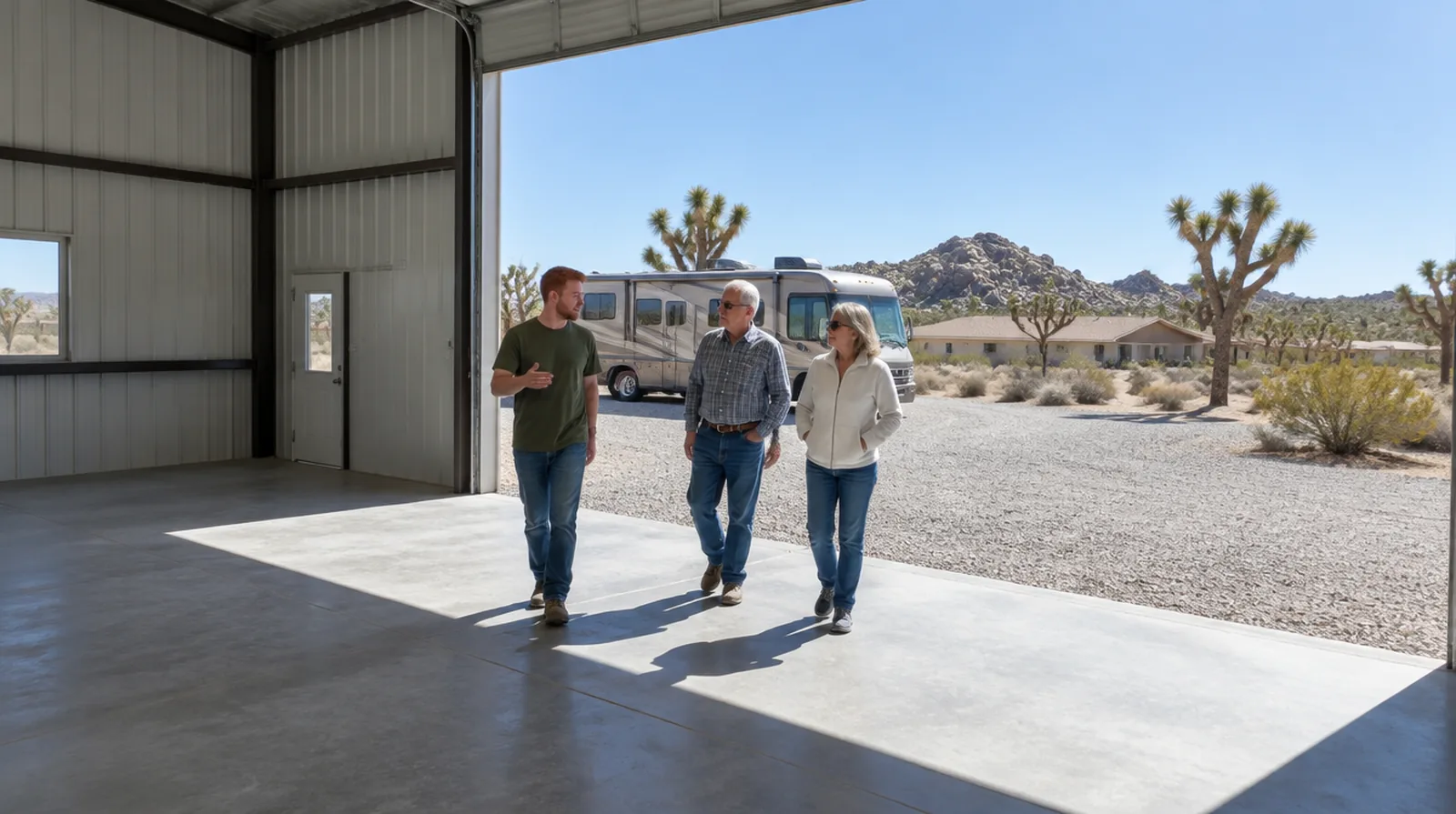
Apple Valley properties often come with more than a standard two-car garage. Half-acre and larger lots leave room for RV garages, detached shops, horse barns and casitas, and each of those buildings sits on its own slab with its own job to do. When you call us, we can look at one building or plan floors across the whole property in a single visit.
RV garages and tall shops
RV garages have high doors, long bays and slabs that carry heavy loads. We walk the full length with you, note where the motorhome or trailer parks, and look for cracks along control joints and near the apron where the weight sits. A flake system with a sturdy topcoat is the most common choice for these spaces, since it hides the dust and tire marks that come with a big vehicle.
Workshops on acreage
Many owners here run a wood shop, a welding bench or a small engine repair area out of a detached building. Those floors see sawdust, grinding sparks, dropped tools and oil. We talk about what you do in the shop so the coating and texture match the work, and we can leave clean, uncoated pads where you want to anchor a machine later.
Casitas and guest quarters
Detached casitas are common on larger lots, and some started life as garages. A decorative floor can turn a plain slab into a finished room for family visits or a home office. Metallic and flake finishes both work, and we check for moisture first since a lived-in room needs a dry slab under the coating.
Living with sand and gravel yards
Gravel driveways and desert landscaping mean grit gets carried in on tires and boots every day. A sealed floor makes that grit easy to sweep out instead of grinding into bare concrete. We also suggest checking the bottom seal on the garage door, since a worn seal lets fine sand drift across the floor with every wind.
Planning a multi-building job
- We list each slab, its size and what it is used for
- We note which buildings need repair before coating
- We suggest an order so you always have somewhere to park or store things
- We group work by system so materials are used efficiently
Long drives and rural addresses
Some homes sit on dirt roads or at the end of long private drives. Let us know about gates, dogs, livestock or soft spots on the road so the crew and trailer arrive without trouble. Clear directions help a lot in areas where map apps do not always find the right driveway.
Where we work
We cover Apple Valley from Jess Ranch and the golf course area to the neighborhoods off Bear Valley Road and the larger lots toward the north and east. We also work in Hesperia, Victorville, Lucerne Valley, Phelan, Oak Hills and Adelanto.
Getting started
Send us a few photos of each building, the rough dimensions and how you use the space. If you are not sure which system fits which building, that is fine. We will walk the property, talk through the options and give you a clear plan for each floor.
What a typical visit covers
On site, we measure each slab, test a few spots for moisture, look closely at cracks and joints, and ask how you want each building to work for you. Then we send a written plan you can read over at your own pace.
Get a desert-ready floor quote
Call (760) 515-4269 and we will come out to measure.