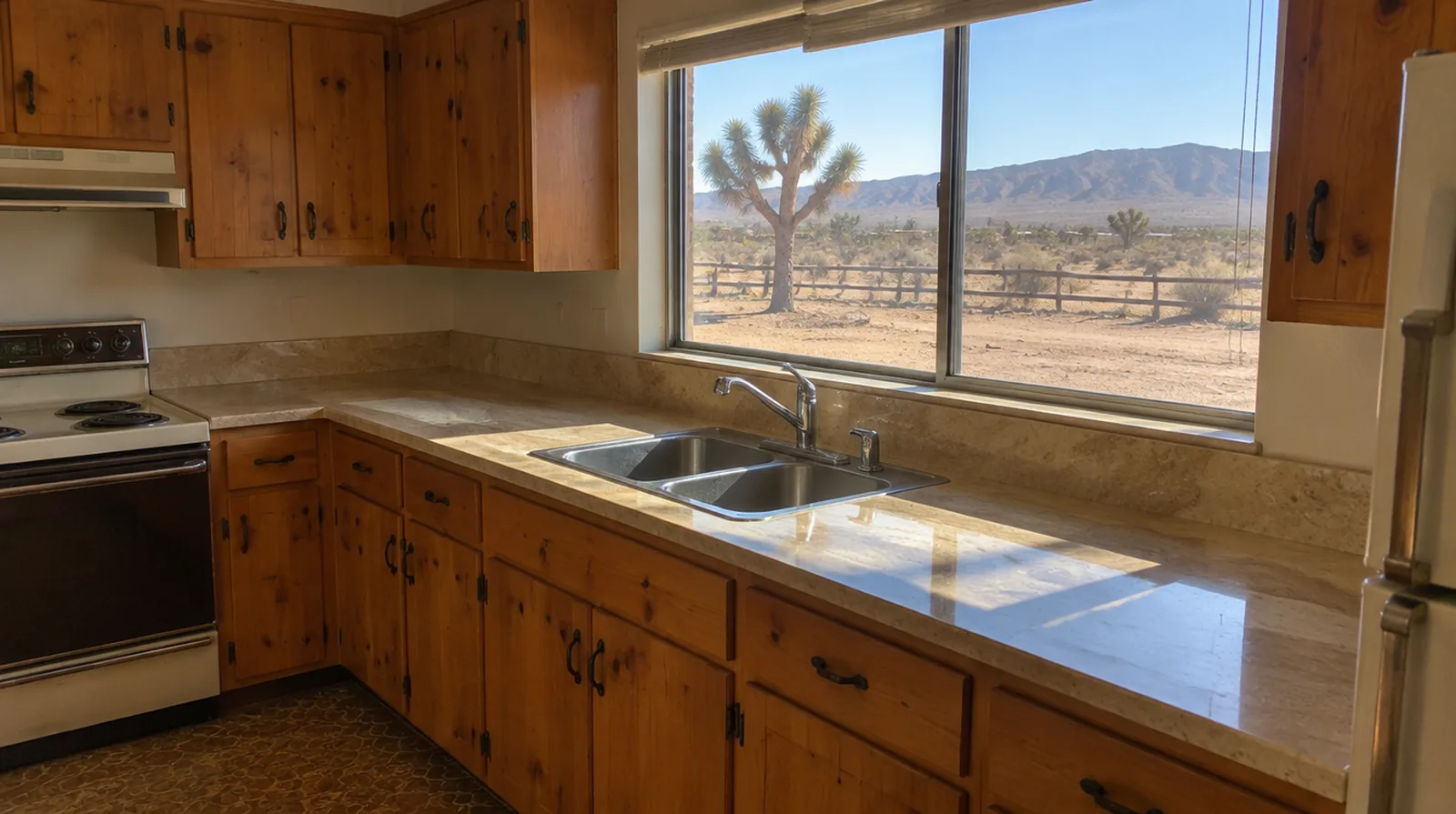
A town of ranch houses and big lots
Apple Valley's modern story began after World War II, when developers Newton Bass and B.J. Westlund subdivided desert homesites and opened the Apple Valley Inn in 1948. Roy Rogers and Dale Evans later made the town home for years. Much of that ranch character remains: single-story houses on half-acre to multi-acre parcels, horse properties with barns and tack rooms, and detached shops where owners spend as much time as in the kitchen.
Those properties have a lot of counters, and many of them are original. We resurface them in place with epoxy, which gives a seamless, easy-to-wipe surface without tearing out cabinets or built-ins.
Why the desert changes how we work
At around 2,900 feet, Apple Valley has very low humidity, strong spring winds and wide daily temperature swings. Each of those affects resin:
- Dust. A single gust through an open door can leave grit in a wet coat. We seal the room, cover vents, and keep doors closed throughout the pour and first cure.
- Cold nights. Epoxy cures slowly when it gets cold. In fall and winter, rooms can chill fast after sunset, so we keep heat steady overnight to protect the finish.
- Hot afternoons. In summer, heat shortens the working time. We pour early and keep the space cooled.
- Dry air. Low humidity is actually an advantage. It reduces the cloudy film resin can form in damp climates.
Styles that suit the High Desert
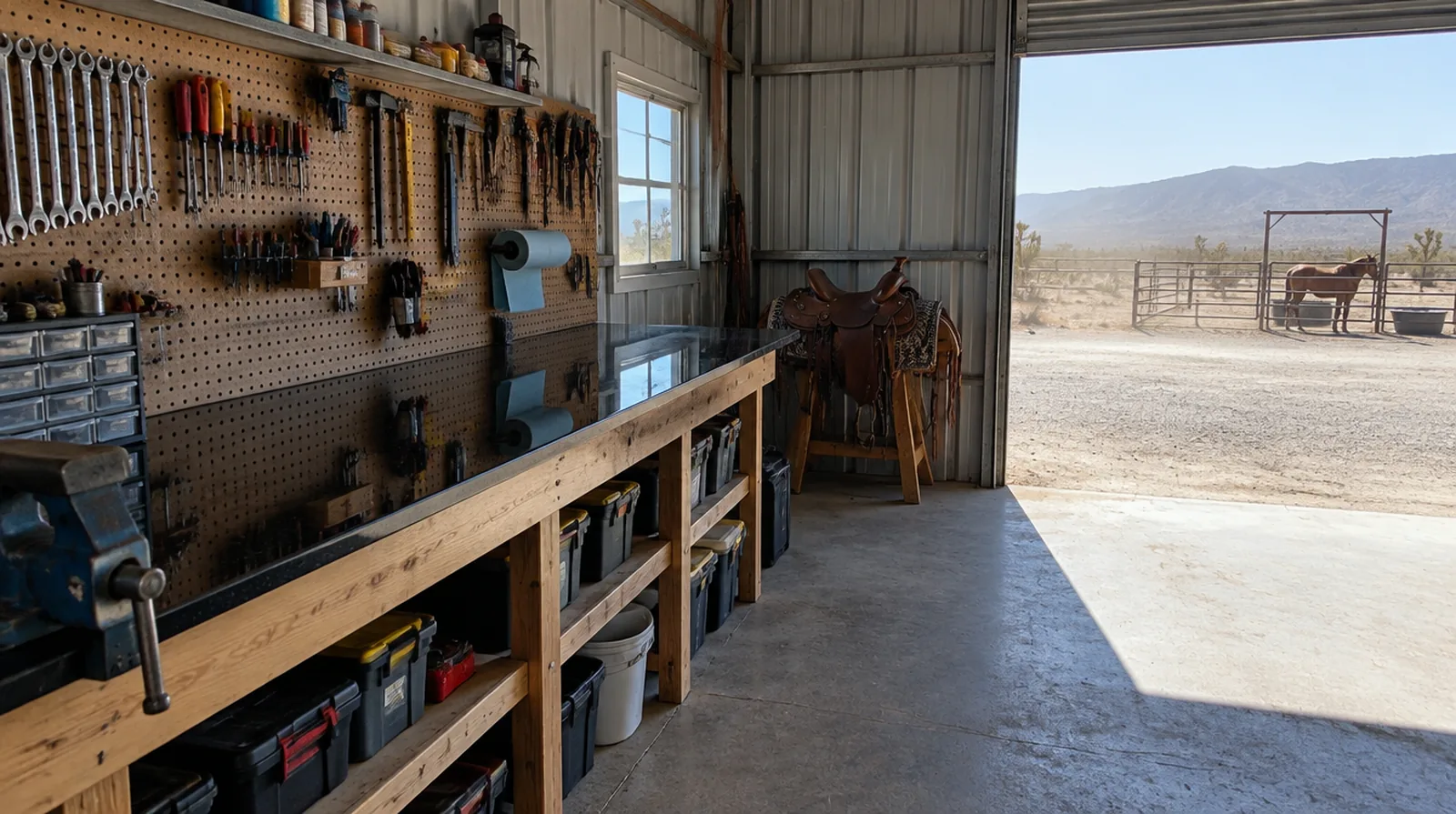
Desert homes often look best with warm, earthy finishes. Travertine and sandstone looks, cream with tan veining, and copper or bronze metallics work well with wood cabinets and tile floors. For workshops, garages and tack rooms, a solid black, gray or tan top is tough, easy to clean and does not show every scuff. If you like the swirled look, our metallic epoxy pigments can be used on counters too.
The process
- We check the existing top. Swollen particleboard around an old sink, loose laminate and cracked tile are repaired or replaced first.
- Surfaces are degreased, sanded and filled smooth.
- Cabinets, floors and walls are masked, with plastic hung to catch edge drips.
- Primer and a base color go down.
- The decorative layer and clear flood coat are poured, styled and torched to release bubbles.
- After the first cure, edges are sanded and the room is cleaned.
A typical kitchen takes two to three working days. Give it about three days before setting things on it and around a week for full strength.
Good to know before you choose epoxy
Resin is durable but it is not stone. Hot pans can leave marks, so trivets are a must. Knives will scratch it, so use a board. The intense desert sun is the other factor. Counters in direct afternoon sun from a west window can slowly amber, and an uncovered outdoor bar will yellow and soften in summer. For sunny spots we use UV-resistant resin and recommend window shades. For patio bars, we only coat surfaces under a solid roof.
Workshops, barns and garages
Shop benches take abuse: oil, paint, glue, tools dropped on edge. A thick black epoxy top shrugs off most of it and wipes clean, and many of our Apple Valley clients have us coat the shop floor in the same visit. See our garage floor epoxy and flake flooring services if you want the floor done too.
Pricing
Every quote is written after we see the counters. Size, the number of finished edges, backsplashes and repairs to the old surface set the price. Since nothing is demolished or fabricated off site, resurfacing usually costs far less than new granite or quartz, and the cabinets, sink and plumbing stay untouched.
Around the Victor Valley
We serve homes throughout Apple Valley, from the older areas near the original inn site to the newer subdivisions off Bear Valley Road and the ranch parcels toward Lucerne Valley, plus nearby Victorville and Hesperia.
Common questions
Can I use the kitchen during the job?
The counters are off-limits during the pour and first cure. Many families set up a small prep station in another room for a few days.
Does epoxy smell?
There is some odor during application. We ventilate as much as possible without letting dust in.
Can it go over butcher block?
Yes, once it is sealed so the wood does not release air bubbles into the coat.
Get a price on epoxy counters in Apple Valley
Call (760) 515-4269 to set up a visit. We will measure, bring desert-tone color samples and tell you how long the room needs to stay closed while it cures.